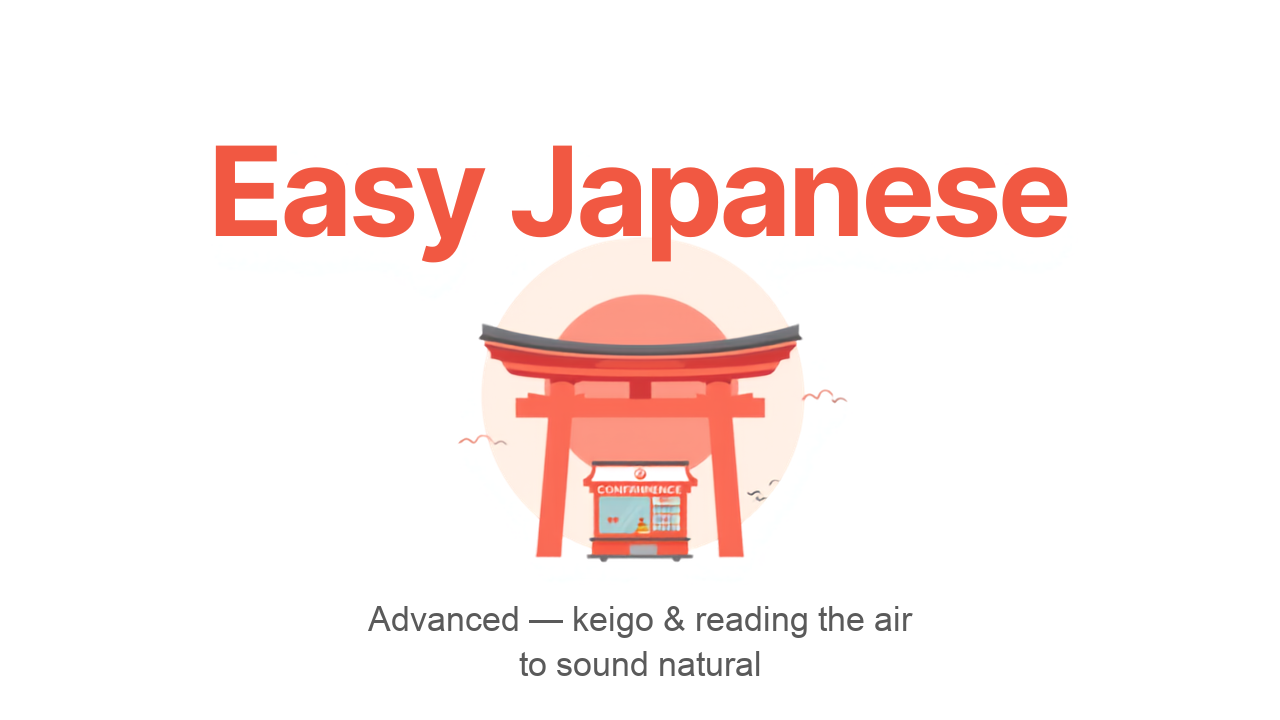

※For English speakers in Japan. 在日英語話者向け。Japanese with romaji. ローマ字付き。Usage varies by workplace and region. 職場・地域で差があります。
Who this is for(こんな人のための記事です)
- You can make sentences, but native conversation feels too fast / too indirect(文は作れるが、ネイティブの会話が速い・遠回しで掛めない)
- Your Japanese sounds "textbook," not natural(教科書っぽくて不自然)
- You want to handle work and relationships smoothly in Japanese(仕事や人間関係を日本語でうまく回したい)
The advanced theme isn't more vocabulary(上級のテーマは単語量ではありません):
Sound natural and respectful by mastering register (keigo) and "reading the air."(敬語と「空気」を使いこなし、自然で失礼のない日本語にする。)
The real wall(本当の壁)
Beginner = words; intermediate = sentences. Advanced = matching your speech to the situation and the listener. Japanese encodes social distance in the form of the verb. Miss this, and even correct Japanese can feel off.
入門は単語、中級は文。上級は場面と相手に合わせること。日本語は社会的距離を動詞の「形」に込めます。ここを外すと、正しくても場面に合わず不自然に感じられることがあります。
The free takeaway: the advanced mindset(上級者の判断軸)
Before speaking, ask: "What is my relationship to this person, right now?" Distance decides the form.(相手との距離で「形」を選ぶ。)
Casual with friends, polite (desu/masu) with most people, and humble/honorific (keigo) with customers and superiors. One habit — choosing the register first — helps you sound more natural.
友達には普通形、たいていは丁寧形、客や上司には敬語。先に距離を決めるだけで自然に近づきます(感じ方には個人差があります)。
What you'll get in the paid part(有料パートで分かること)
- Keigo without panic: the 3 types (polite / humble / honorific) and ready phrases(敬語3種と即使える表現)
- Register switching: casual ↔ polite, and when to use which(普通形↔丁寧形の切替)
- Aizuchi (back-channeling) so conversations flow(相づちで会話が回る)
- Nuance particles ね・よ・んだ that make you sound like a local(ニュアンスの小詞)
- Reading the air: indirect "no," softening, and listening strategy(空気を読む・遠回しの断り・聞き取り)
💡 This 1,000 yen focuses on the gap between "technically correct" and "actually natural" Japanese — the part textbooks rarely teach. この1,000円は「正しい」と「自然」の差、教科書が教えない部分を埋める助けになります。

 この記事の販売者